Cyber Risk in 2026: Why Security Teams Must Shift From Assessing to Acting
Cybersecurity teams are assessing more often, but without prioritization and clear direction, most of that effort isn’t translating into action.
Security Teams Are Assessing More but Acting Less
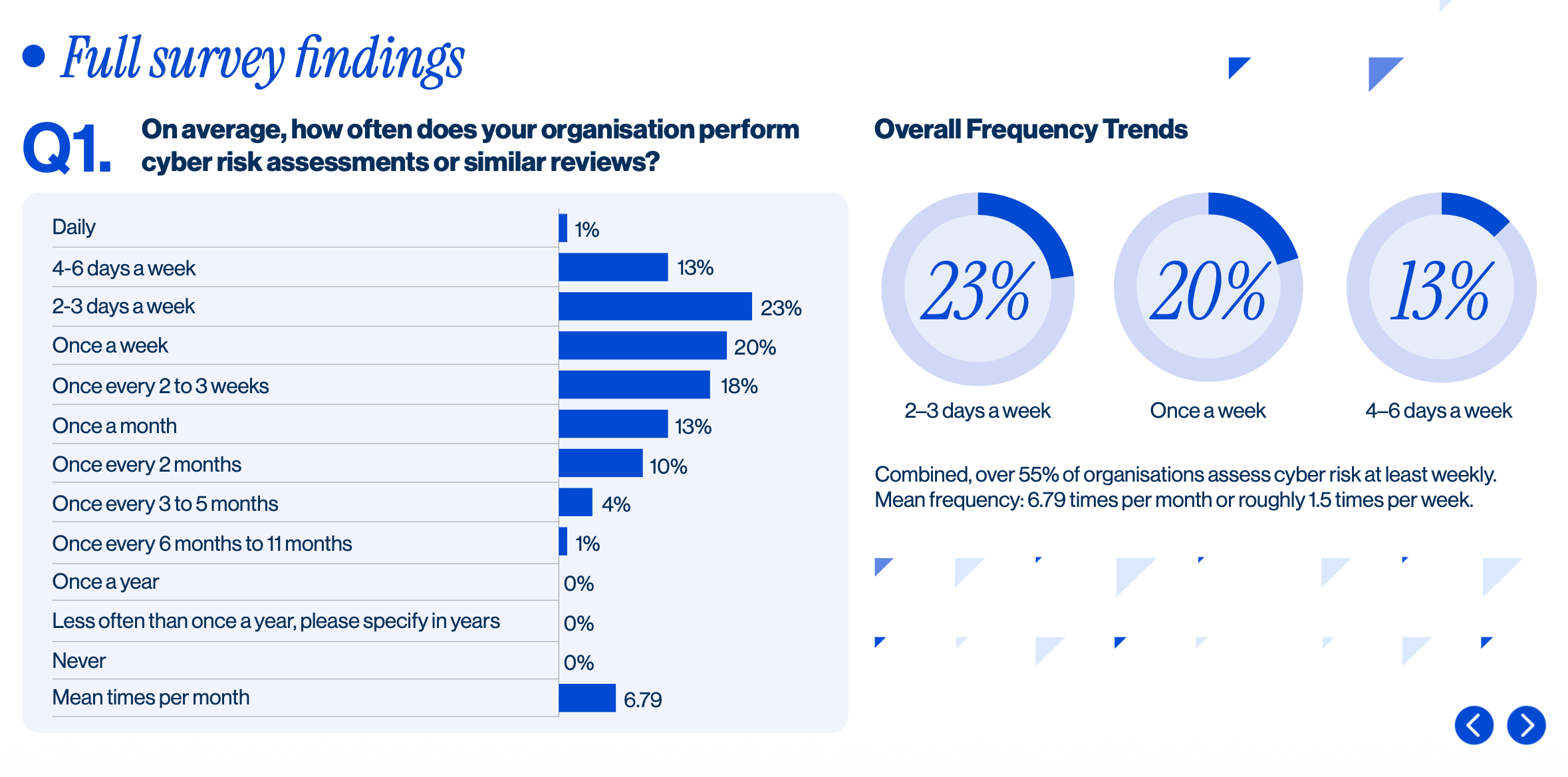
Cyber teams are busy. Risk assessments happen weekly at most organizations. But what happens next? For too many, the answer is: not enough.
According to a recent study on cyber risk management practices, over 55% of security teams run assessments at least once a week. That’s a lot of scanning, scoring, and summarizing. But here’s the thing: frequency doesn’t equal follow-through. In 2026, the shift needs to be from tracking risk to actually reducing it.
Read the Cyber Risk Management 2025 report to explore the data in detail. https://www.deriverisk.com/2025-survey
What’s Holding Teams Back
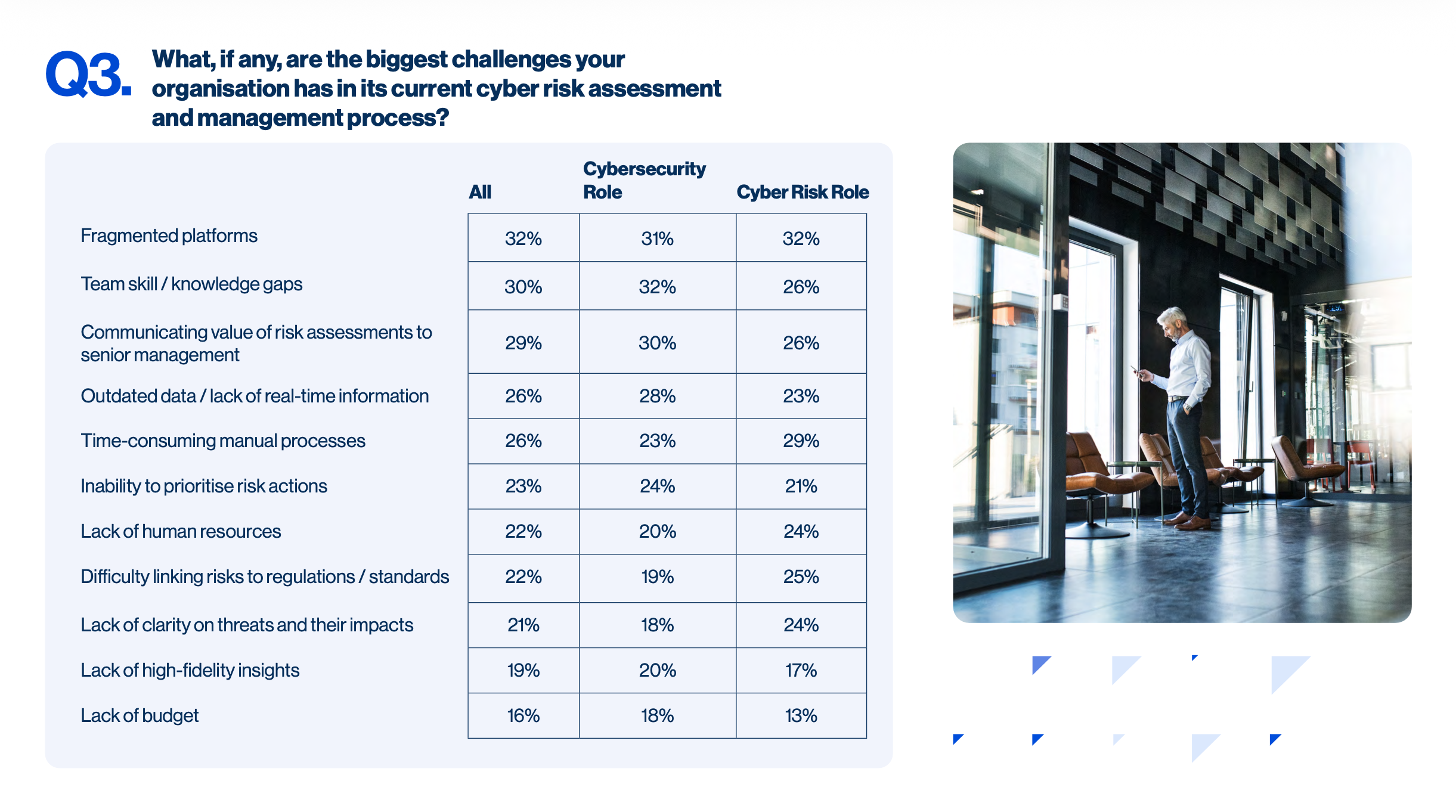
Assessments aren’t the issue. Action is. Teams are still stuck with fragmented tools, scattered spreadsheets, and too many dashboards with different data sources. Over 31% report tool sprawl as a major challenge, and nearly 44% rely on manual processes to stitch it all together.
And while gut feel and compliance checklists still dominate prioritization, only 15% are using severity scoring. That’s a clear sign that risk decisions are still more reactive than intentional.
“Cyber teams are stuck managing risk through static reports and disconnected tools. What the’re asking for is live, financially grounded visibility that tells them exactly what to do next.”
— Alex Nette, CEO of Derive
What Needs to Change in 2026
No team wants to spend another year chasing assessments that don’t lead to action. 2026 is the year to rethink how risk is managed day to day.
Practitioners need to move from snapshots to real-time views, from scattered tasks to centralized workflows. CISOs and boards need risk reports that go beyond red, yellow, green. Reports must clearly show what’s working, what’s not, and what it’s costing.
And everyone needs shared context. With 88.5% of leaders saying peer benchmarks shape their strategy, it’s time to bring that outside-in perspective into planning.
Key Takeaways for 2026
Weekly assessments are standard, but most teams still struggle to act quickly
Nearly half still run cyber risk processes on spreadsheets
Peer comparisons matter, but value clarity is still hard to achieve
The future is about fewer dashboards and more decisive action
Your 2026 Cyber Action Plan
Cyber teams that lead in 2026 will be the ones that operationalize risk, making it real, visible, and measurable. That means knowing what to fix, when to fix it, and being able to prove why it mattered.
This isn’t about doing more. It’s about making every move count.
Read the full report to benchmark your strategy against what high-performing teams are planning. https://www.deriverisk.com/2025-survey
About Derive
Derive is the cybersecurity risk and operations platform that helps teams quantify risk, prioritize actions, and prove impact. Built on real-world data and modeled in real time, Derive replaces traditional GRC platforms with a single, measurable system that connects cybersecurity risk to business outcomes. Headquartered in Richmond, Virginia you can learn more at www.deriverisk.com