
What Should You Fix First in Cybersecurity? Prioritizing Cyber Risk by Impact
As 2026 kicks off, security teams are navigating a familiar storm: endless alerts, budget pressures, tighter scrutiny from the board, and a wave of AI-driven risks that feel more unpredictable than ever. Q1 is always noisy. That’s why the most effective security leaders use it to reset and re-center their teams around what matters most: prioritization and efficiency.
If your inbox and dashboards feel overwhelming already, you’re not alone. The truth is, cybersecurity hasn’t kept up with how modern organizations operate or measure performance. Its time for a shift.
Stop guessing. Start prioritizing cyber risk by impact.
Why the Traditional Approach Isn’t Working
Many security teams still rely on static checklists or heat maps that label risks as high, medium, or low. These tools may check a compliance box, but they don’t reflect the real cost of risk to the organization. As cyber threats become more dynamic and business leaders demand clearer answers, this status quo is no longer enough.
In 2025, IBM’s Cost of a Data Breach Report found the global average cost of a data breach was $4.44 million, with U.S. organizations averaging more than $10 million per incident.nbsp;
These figures highlight a critical disconnect: teams are tasked with protecting the business but lack a business-centric way to measure and prioritize their work.
The Real Goal: Quantifying Risk in Business Terms
It’s not about more dashboards or tools. It’s about changing how we think. Cybersecurity needs a shared language with the business - one grounded in financial impact. Cyber risk quantification (CRQ) makes this possible, moving teams from vague scores to clear, data-driven insights.
What is our potential loss if this risk materializes?
What actions meaningfully reduce that loss?
How do we communicate security’s value in dollars, not technical jargon?
Some teams are adopting CRQ to forecast and model risk in business terms - read more about this.
Prioritization Requires Real-Time Intelligence
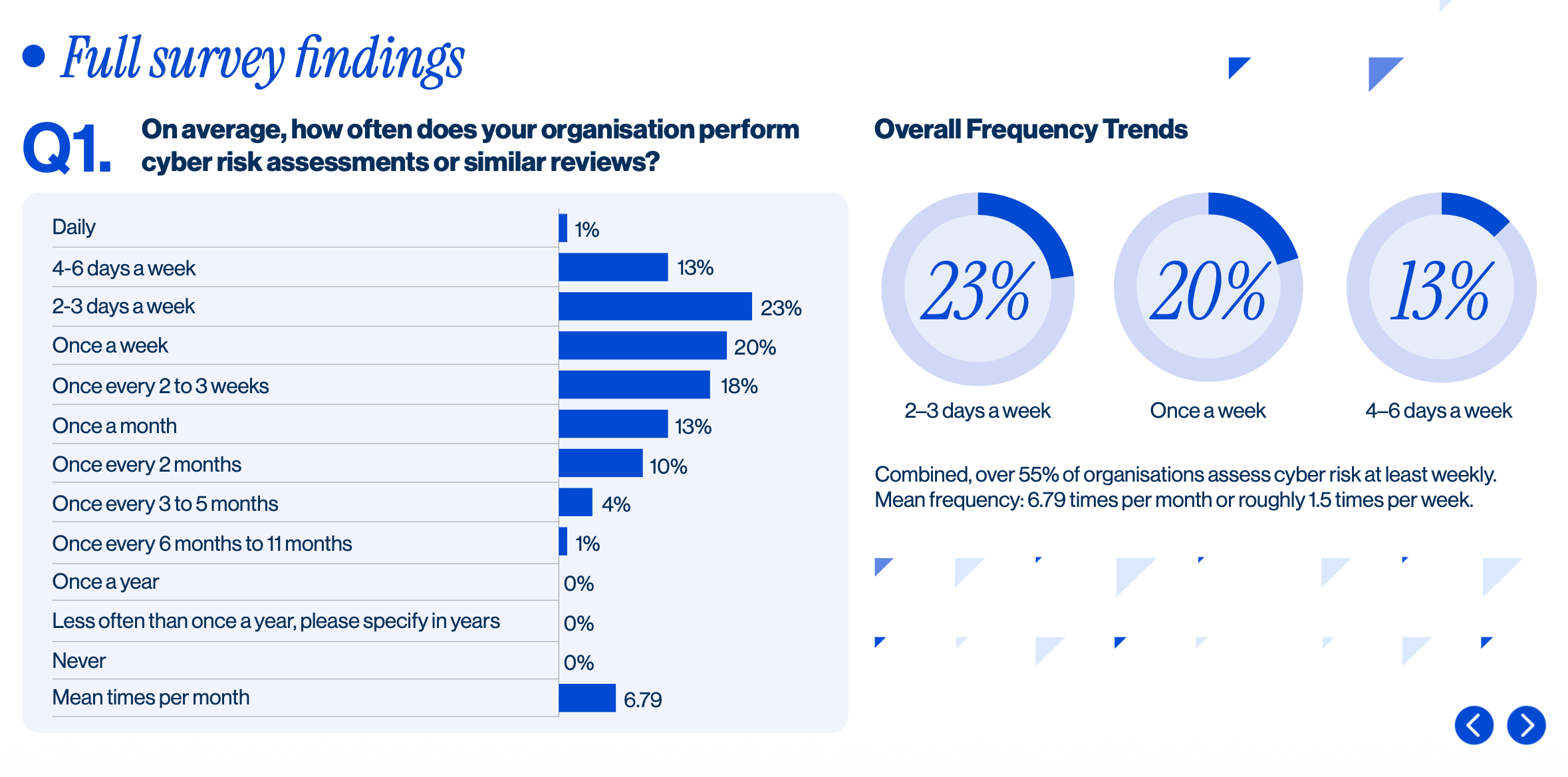
Quarterly assessments aren’t enough. Risk shifts too quickly. Teams need continuous inputs from operations, threat intel, control gaps, and business priorities to keep their focus aligned with what matters most.
Some modern platforms now offer dynamic modeling, where prioritization adapts as new signals come in. This enables faster decision-making and more targeted action when and where it matters most.
Old GRC vs Impact based decision making separates preeminent cyber teams from less mature ones.
Operationalizing Risk Management
The shift isn’t just philosophical - it must show up in daily workflows. Teams need systems that reflect the way they work.
Access and entitlement reviews
Third-party and vendor risk processes
Business continuity planning
Ongoing risk assessments and reporting
These processes should be measured not just by completion, but by the risk reduction they deliver.
Aligning to but Moving Beyond Frameworks
Frameworks like NIST CSF and CIS have helped raise the bar for structured security programs. But today’s risk landscape demands more than structure. It requires speed, insight, and the ability to translate action into outcomes.
This is where risk quantification and continuous decision support can enable leadership, not just compliance.
A More Practical Way to Prioritize
It’s not about labeling risks. It’s about making tradeoffs. Security teams increasingly need to answer:
What’s the likely financial loss if we don’t act?
Which control or fix gives us the greatest reduction per dollar spent?
What’s changed since last quarter, and where should we focus now?
These are the questions guiding a new generation of cyber risk programs. To see how some teams are turning these answers into strategy, read more here.
Built for Execution
We need to get beyond the slide decks. Cybersecurity is operations. For risk programs to evolve, they must be integrated into day-to-day execution - where ownership is clear, outcomes are tracked, and insights are current.
Assign risk owners based on workflows
Link work outputs to expected risk reduction
Refresh risk models as evidence changes
Report outcomes in terms stakeholders understand
More organizations are now evaluating platforms that support this type of work.
Closing Thought
This isn’t about the next tool. It’s about the next mindset. Security teams can lead by shifting how risk is understood, communicated, and acted on. And when that shift happens, cybersecurity stops being a bottleneck and starts becoming a business enabler.
To see how CISOs and CROs are leading this change read more here.
Want more insights?
Check out the Cyber Risk Management 2025: The Path to Effective Risk Prioritisation report